Literature Reviews
This literature review explores the topic of bodies, focusing specifically on the wearable device Fitbit as a means of tracking and analyzing data on individual human bodies. We have chosen this focus as fitness trackers have become a widespread means of communicating body changes, with ‘19% of Americans owning at least one’ (Laricchia, 2020). Because of the popularity of Fitbit, the most well-known of these devices, we are interested in how and if that technology is being used to track bodies in the COVID-19 pandemic. People are drawn to fitness trackers as a convenient means of finding out what their body does and when it does it, communicated through data captured. The device tracks the wearer’s heart rate and distance travelled and makes calculations using these variables, to communicate such things as calorie consumption. This is done in real time, expressed through graphics on a smartwatch or mobile device. The suggestion is that wearers are given insights into what may need to be improved about their behavior to maintain certain levels of health and taps into desires in many contemporary societies to maintain what the wearer might consider to be a socially acceptable bodyweight.
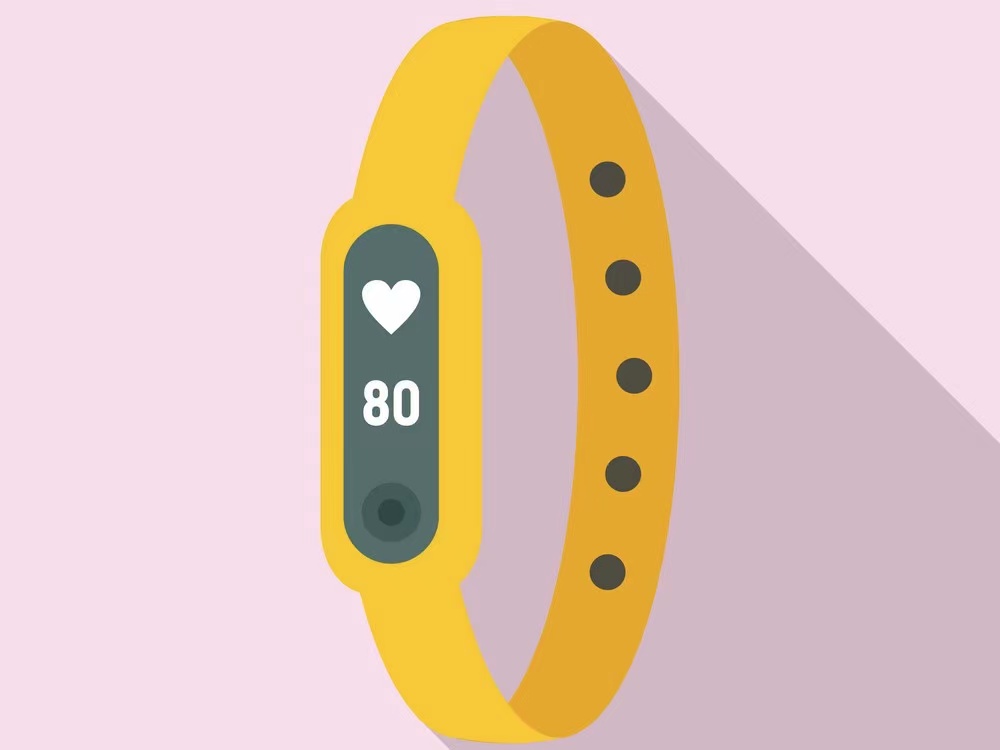
Firstly, in our research, we were interested in the market development of wearable devices. We found that global sales jumped by ‘almost 18% in 2020 according to Gartner’ and that it ‘will grow to more than $81 billion’ (Segarra et al., 2021) by the end of 2021. Other market analysis showed that the shipment volume of smart wearables stood at ‘266.3million units in 2020 and projected to reach 776.23 million units by 2026’ (Mordor Intelligence, 2022). This suggests that popularity of these devices is on the increase and that being able to track and understand the body through data in this way may be seen as a convincing means of monitoring body changes.
We were interested in how fitness trackers have been used for research by collecting data from large populations. This can be to assess certain aspects of fitness and behavioral trends in large populations affected by time or global events. Fitbit released data which showed that there was a significant decrease in step count per day in March 2020, then in the previous year (Fitbit, 2020) for most countries in the world where data was available. Furthermore, Fitbit devices were used to collect and monitor children’s physical activity during the pandemic to compare it to the activity data before the pandemic. The results of this study found that ‘children’s behaviors worsened at a greater rate following the pandemic to pre-pandemic trends’ (Burkart et. al, 2021). This shows the usefulness of the technology in monitoring increased sedentary behaviors during a global pandemic.
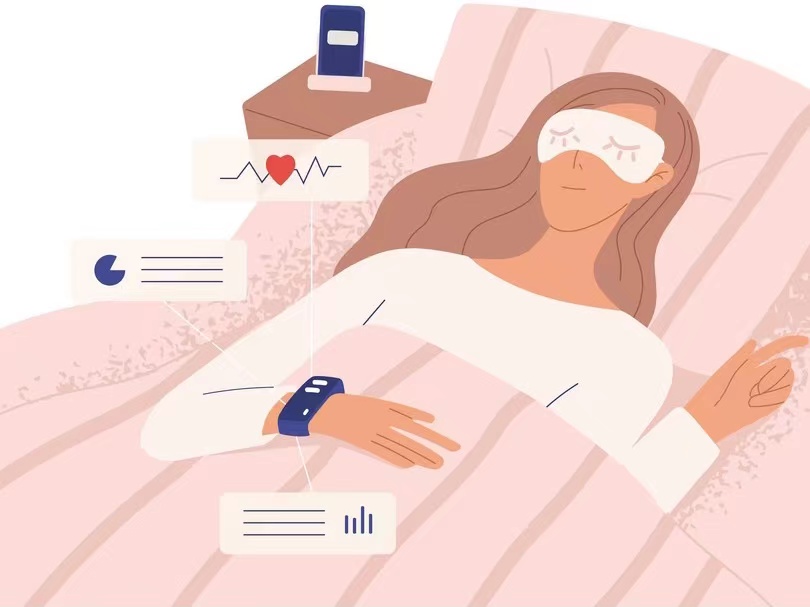
We also found increased use of other biosensor technology by the state under related health concerns. Tracking devices which before the pandemic where mostly for personal use, were being tested for use by governments around the world, such as South Korea who was developing a band that would ‘alert the police if they leave their house while in quarantine’ (BBC News, 2020) or in Bulgaria for a band that can call an ambulance in an emergency.
During the pandemic it is also worth considering the psychological impact of using the technology. One example was of older adults managing type 2 diabetes during the pandemic (Jiwani et al, 2021), using Fitbit. As part of this study, a participant said that a Fitbit device can make them feel like they are ‘much more in tune with (their) body and (they) crave working on (their) goals with dedication’. Also, since fear of COVID-19 and detecting it, in part through its ubiquitous presence in the media, one might be more conscious of monitoring one’s body, and therefore want to record live data and have it analyzed on a moment-by-moment basis. However, such constant self-surveillance is not always positive. Whilst Neff G and Nafus (2016) considered that devices such as Fitbit can be useful to assist users themselves in keeping track of long term conditions, like Type 1 diabetes, enabling users to analyse their own data (Neff et al, 2016 p.58), can also lead to legitimizing ‘negative concepts of the body’ (Neff et al 2016, p.38) enforcing fitness levels that are not suitable for their body. Using fitness trackers like Fitbit can lead to internalizing problems, for example: reaching an ideal weight or level of activity created or implied by the manufacturer, without being sufficiently personalized enough for the body conditions of some users (Neff et al 2016, p.38).
Balbim (2021) states that the use of Fitbit technology in studies ‘has offered detailed insights regarding some of the challenges and limitations associated with their use in research studies for data collection.’ This suggests there is considerable work to be done to develop a more rigorous analysis of the technology and its benefits. However, this literature review clearly demonstrates that there is potential for new insights from existing research.
References
Balbim, G.M. et al., 2021. Using Fitbit as an mhealth intervention tool to promote physical activity: Potential challenges and solutions. JMIR mHealth and uHealth, 9(3).
BBC News, 2020. Coronavirus: People-tracking wristbands tested to enforce lockdown. BBC News. Available at: https://www.bbc.co.uk/news/technology-52409893 [Accessed May 1, 2022]
Burkart, S. et al., 2021. Impact of the COVID‐19 pandemic on Elementary Schoolers' physical activity, sleep, screen time and Diet: A quasi‐experimental interrupted time series study. Pediatric Obesity, 17(1).
Cislo, C. et al., 2021. Monitoring beliefs and physiological measures in students at risk for COVID-19 using wearable sensors and smartphone technology: Protocol for a mobile health study (preprint). JMIR Research Protocols.
Fitbit, 2020. The impact of coronavirus on global activity. Fitbit Blog. Available at: https://blog.fitbit.com/covid-19-global-activity/ [Accessed May 2, 2022]
Neff G. and Nafus D. 2016. What is at Stake? The Personal Gets Political. In: Self-Tracking. Cambridge MA: MIT Press pp. 38, 58.
Quer, G. et al., 2020. Wearable Sensor Data and self-reported symptoms for COVID-19 detection. Nature Medicine, 27(1), pp.73–77.
