
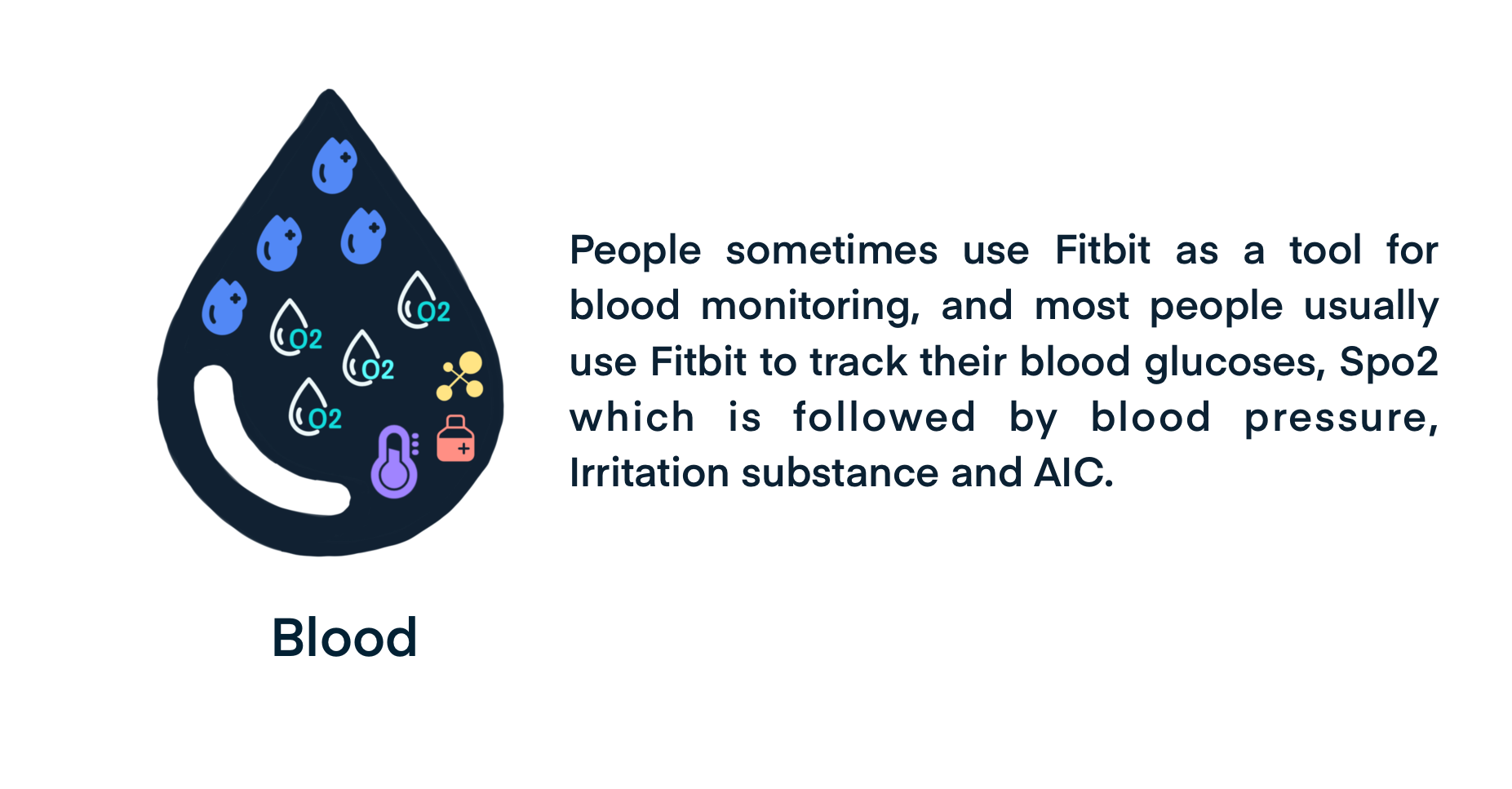
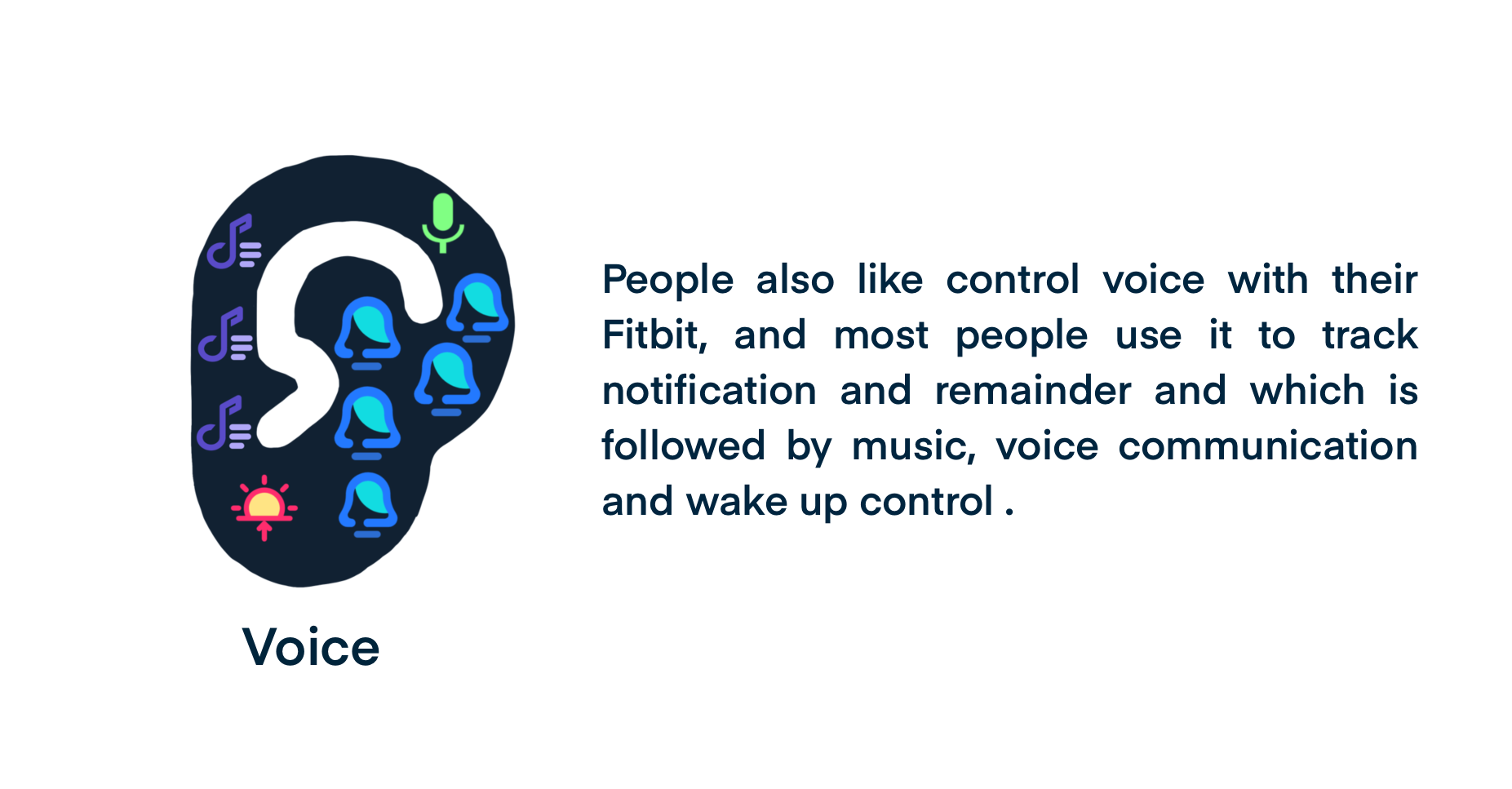
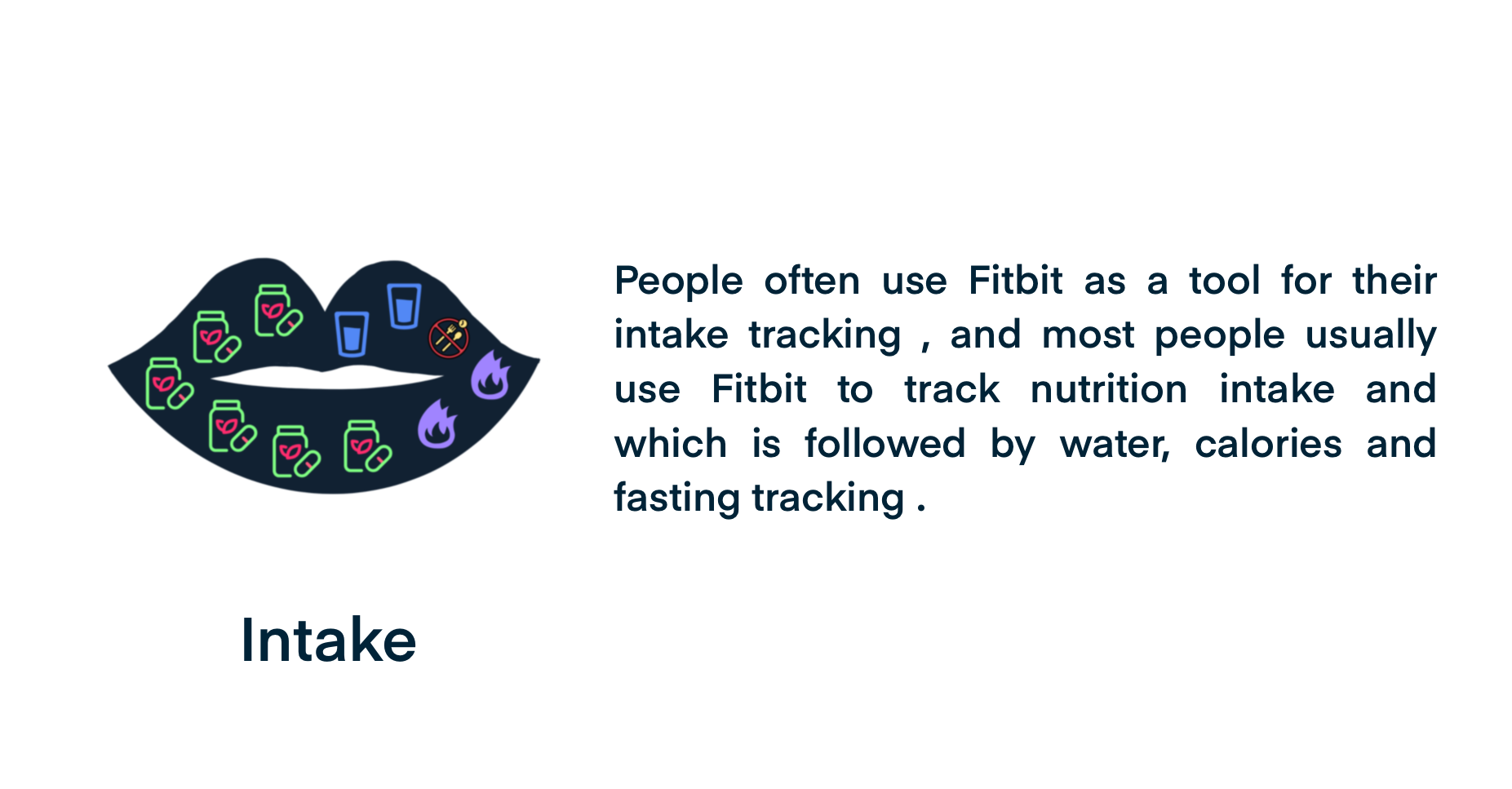
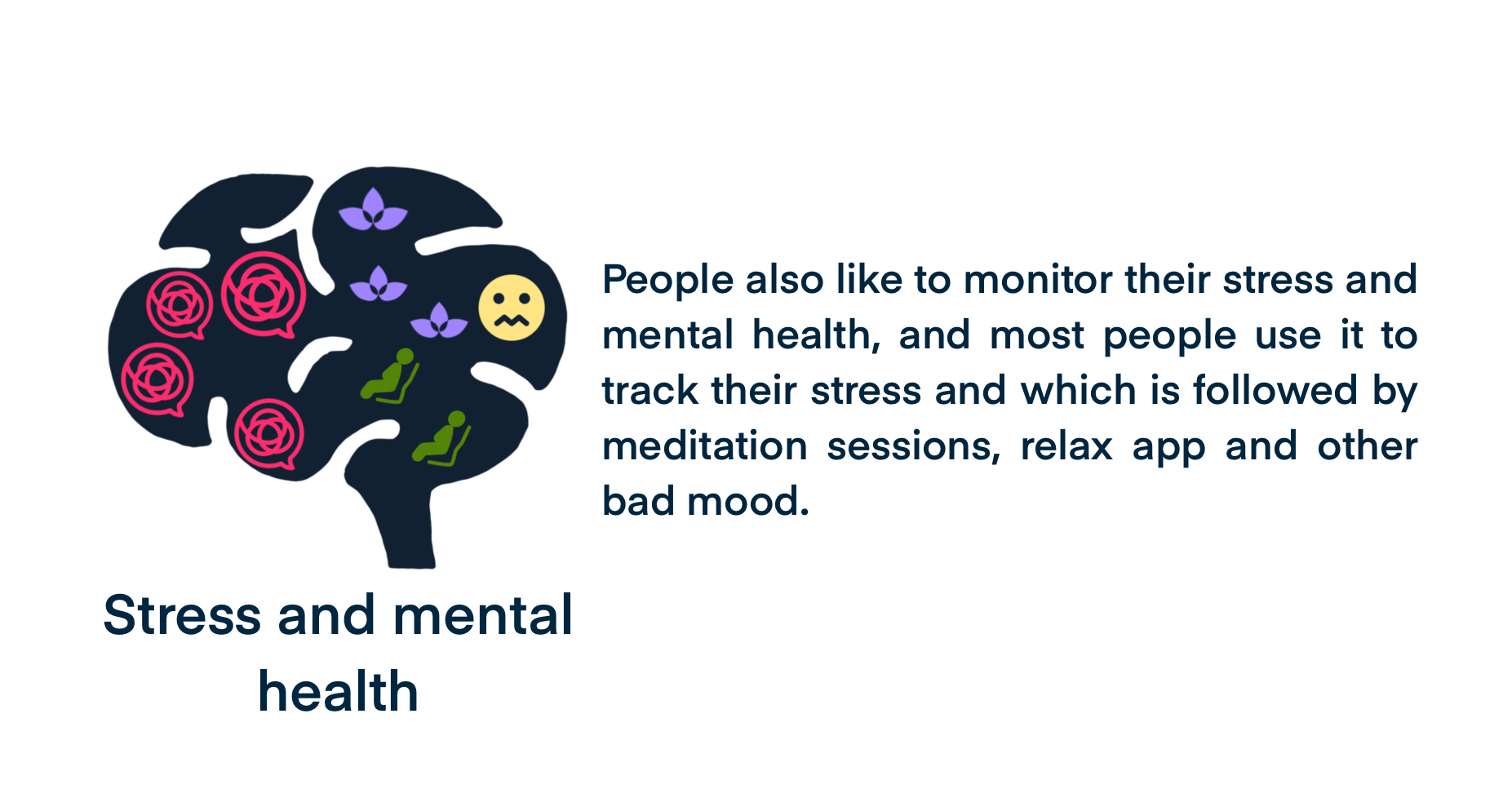
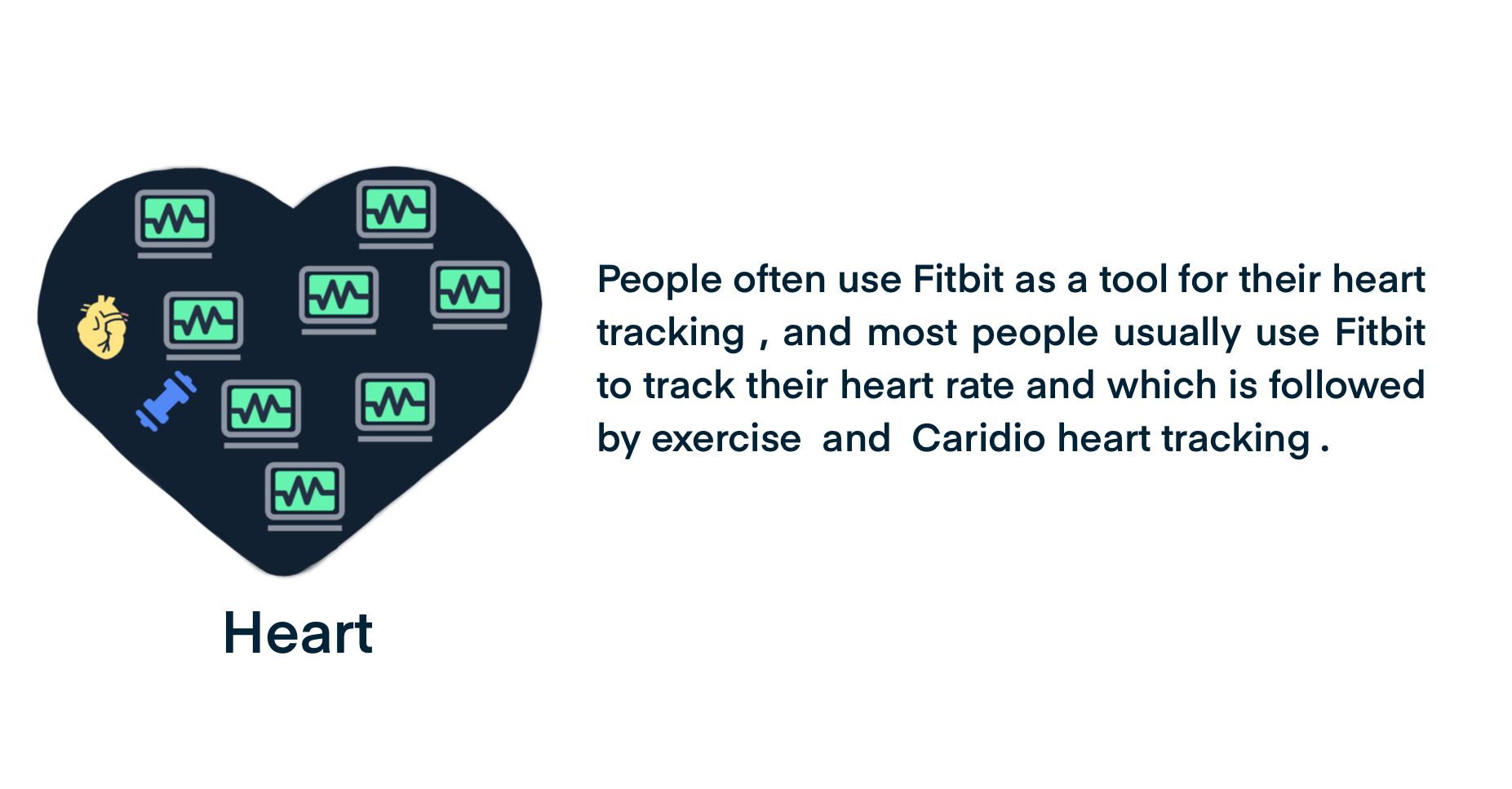
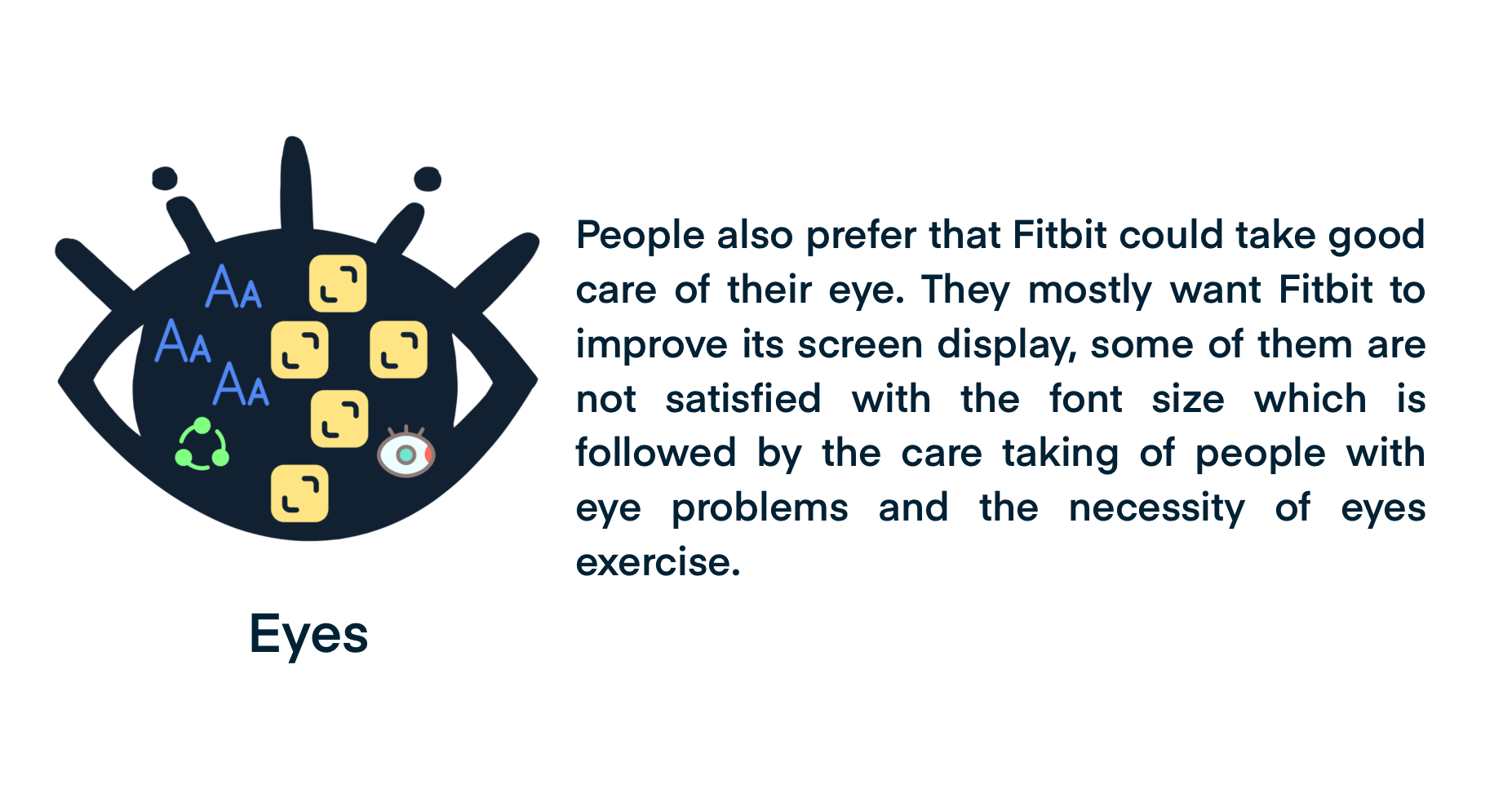
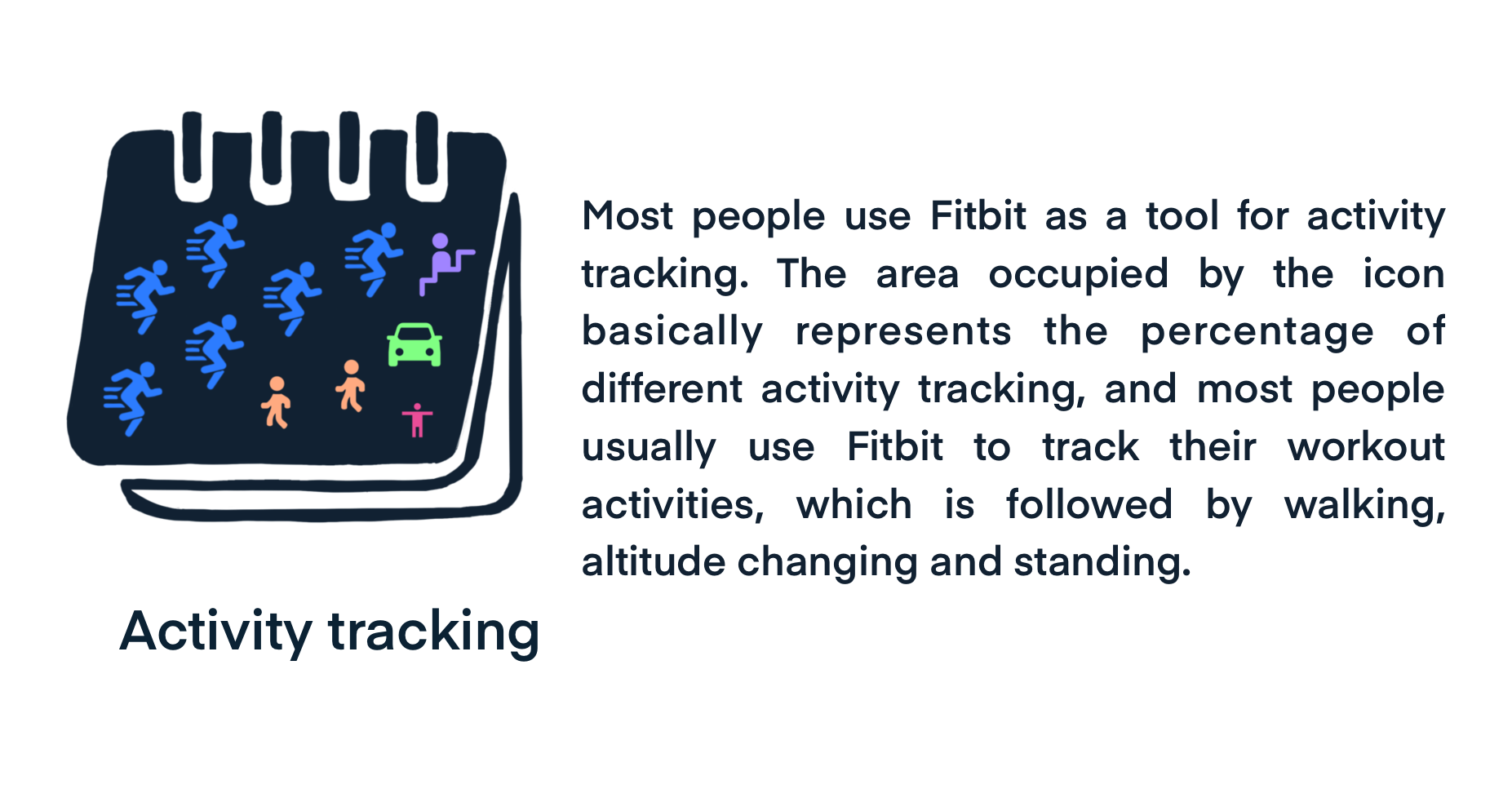
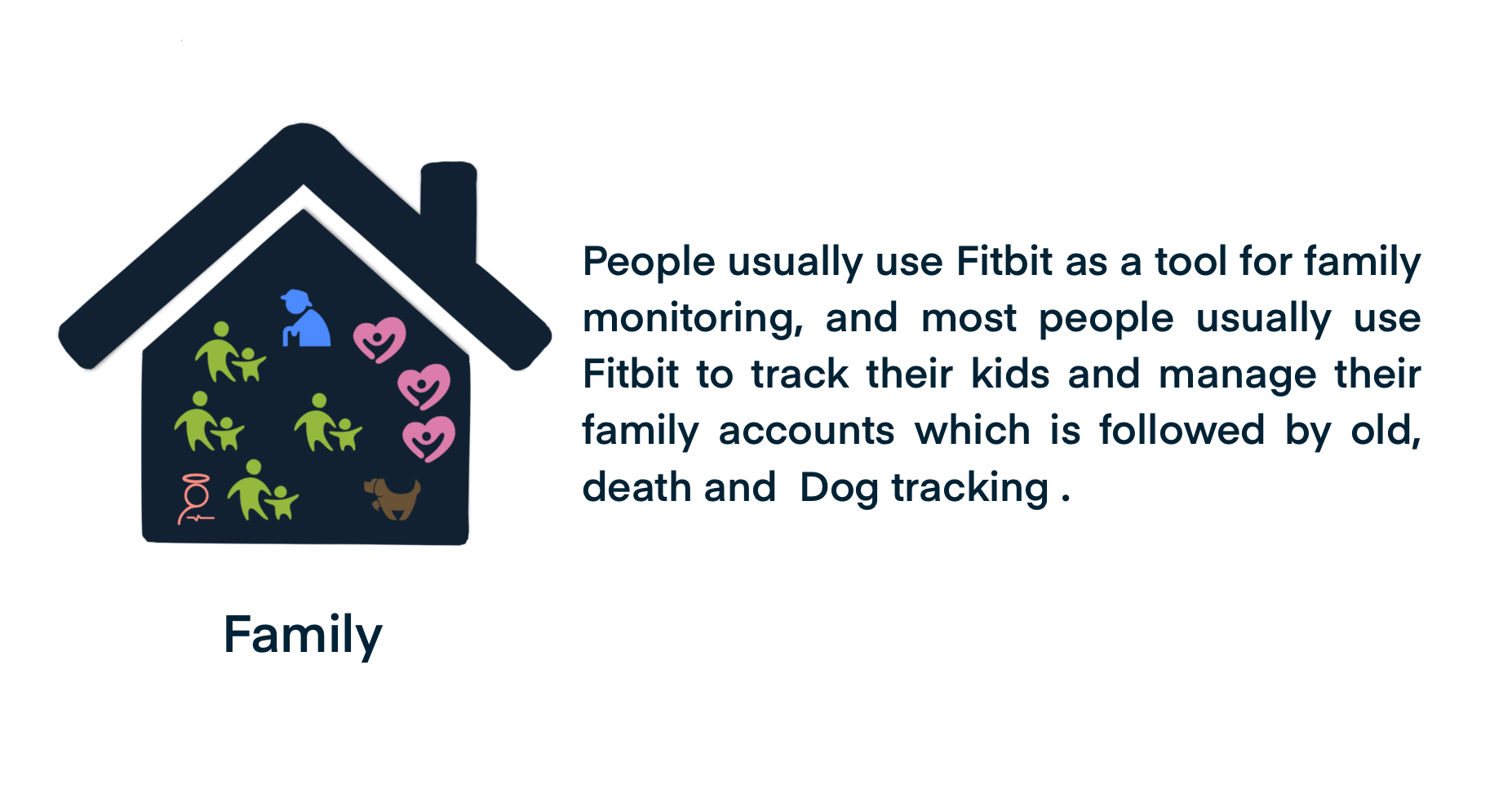
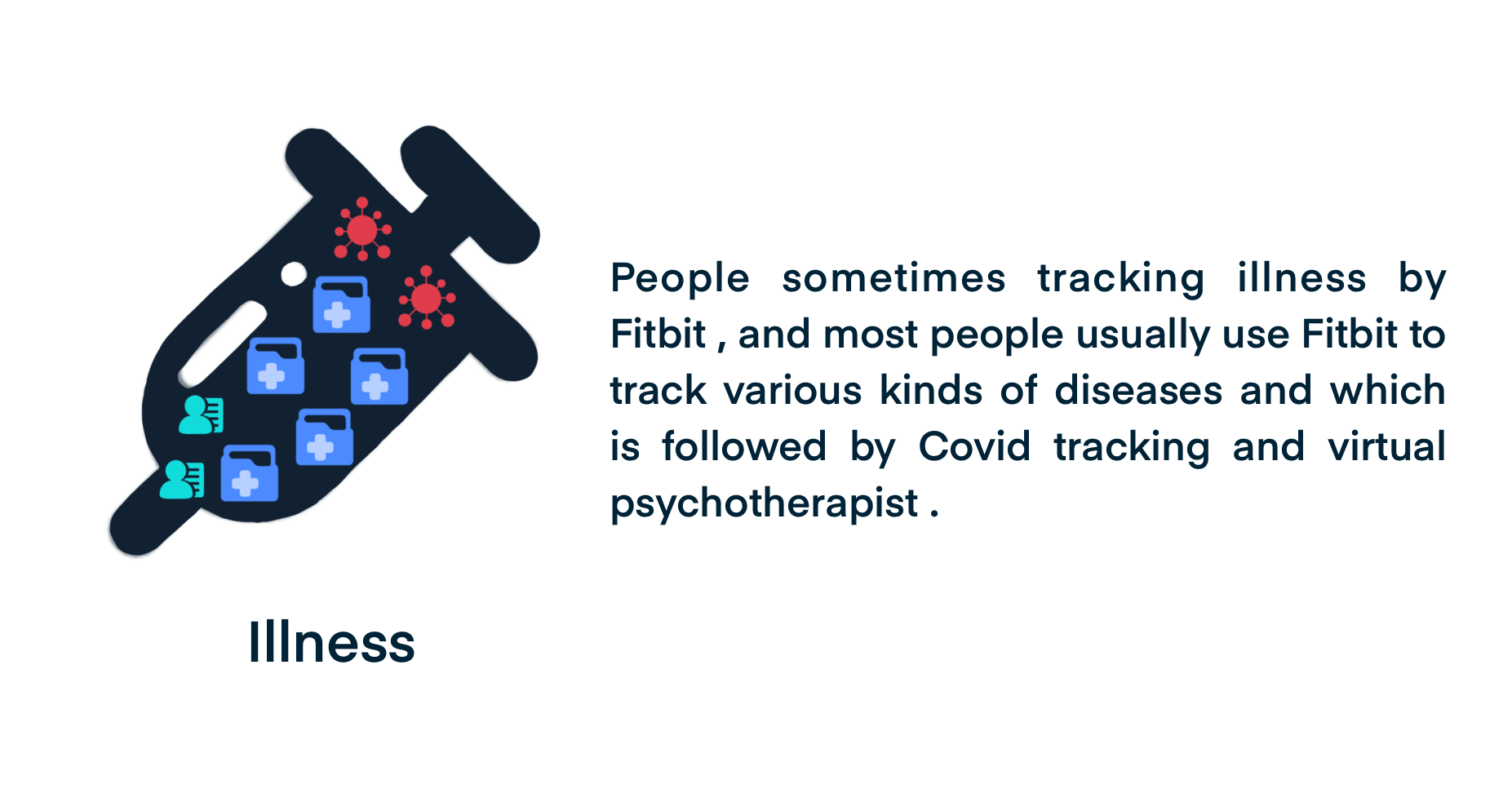
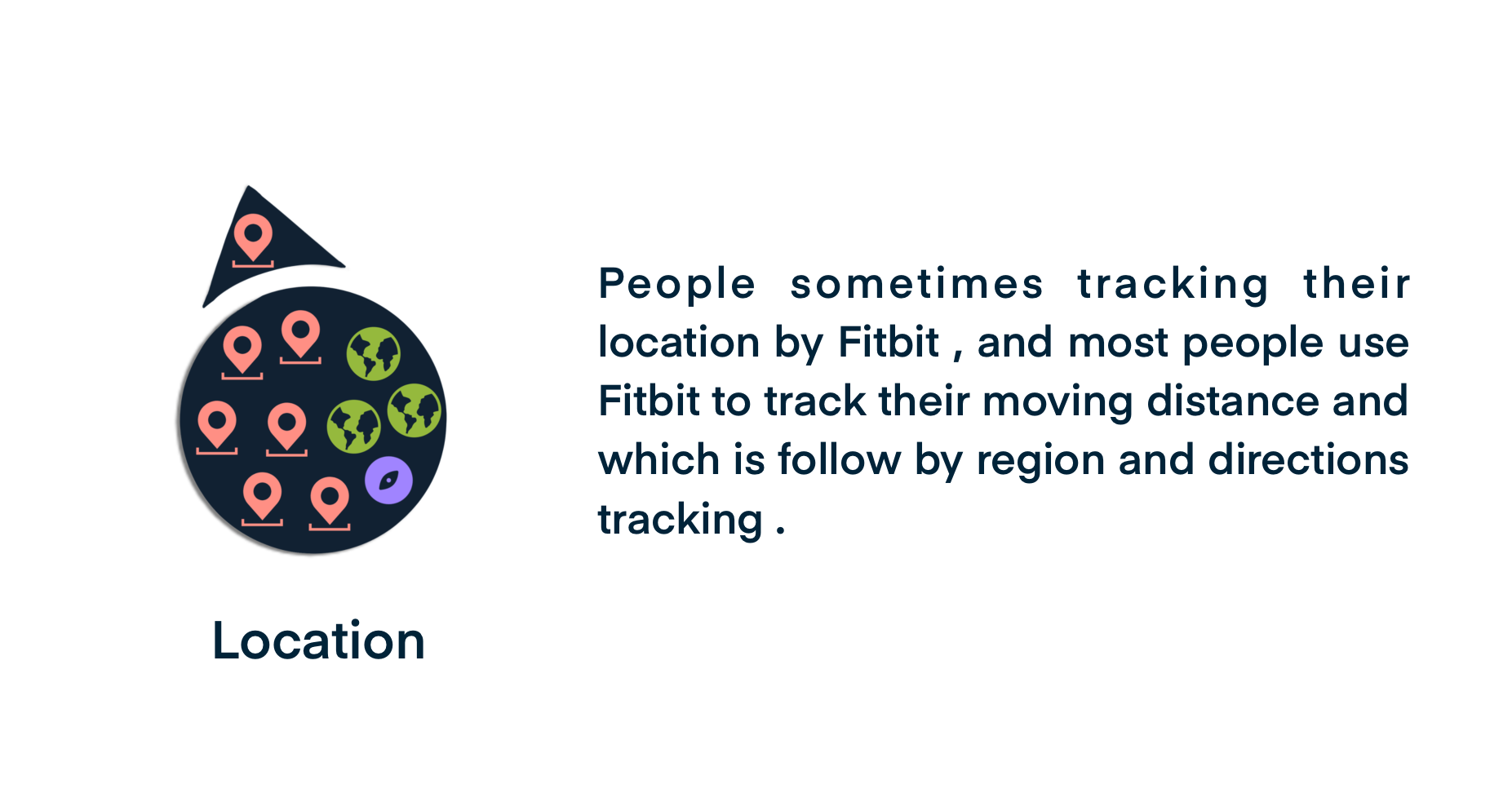
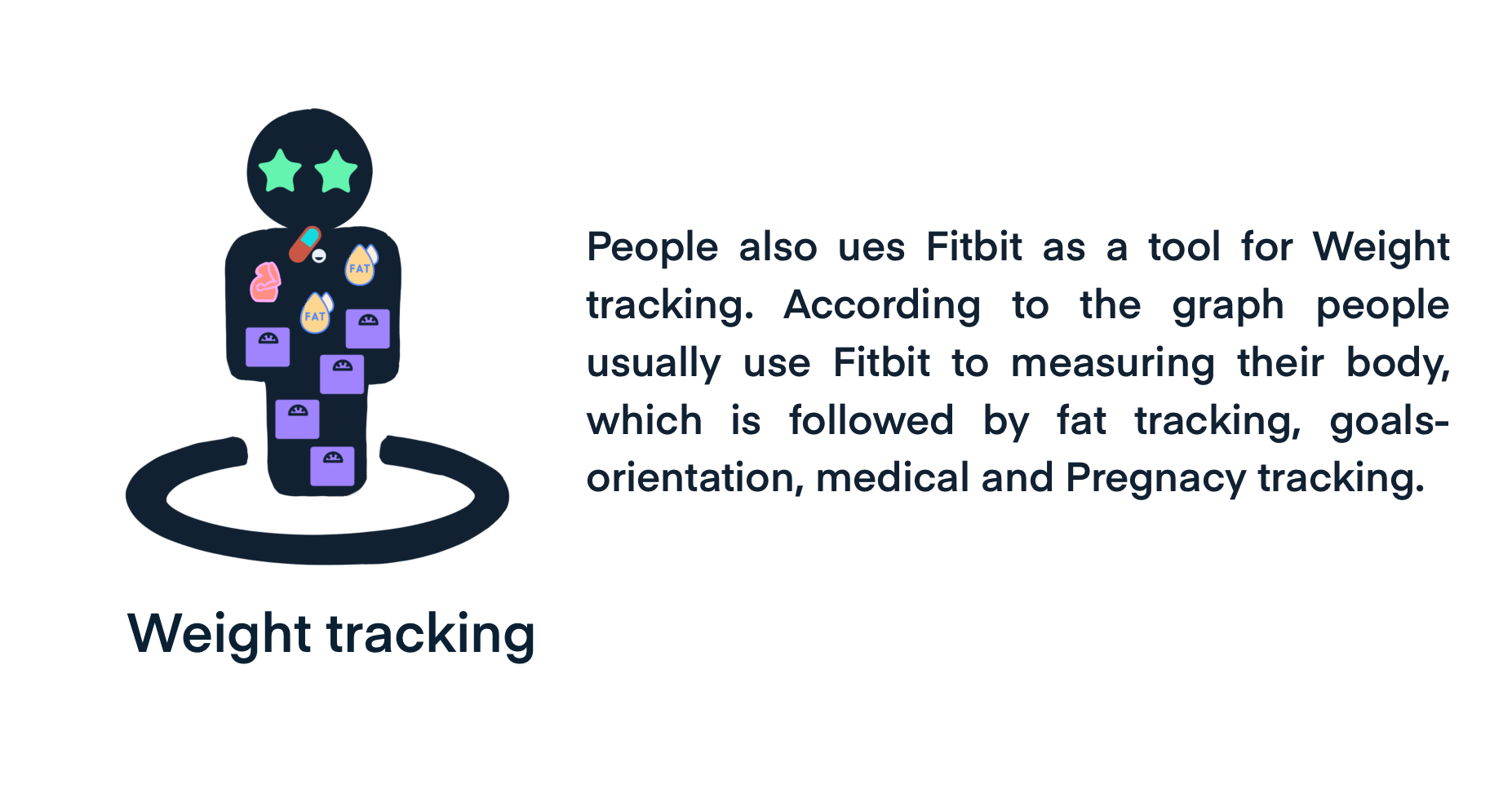
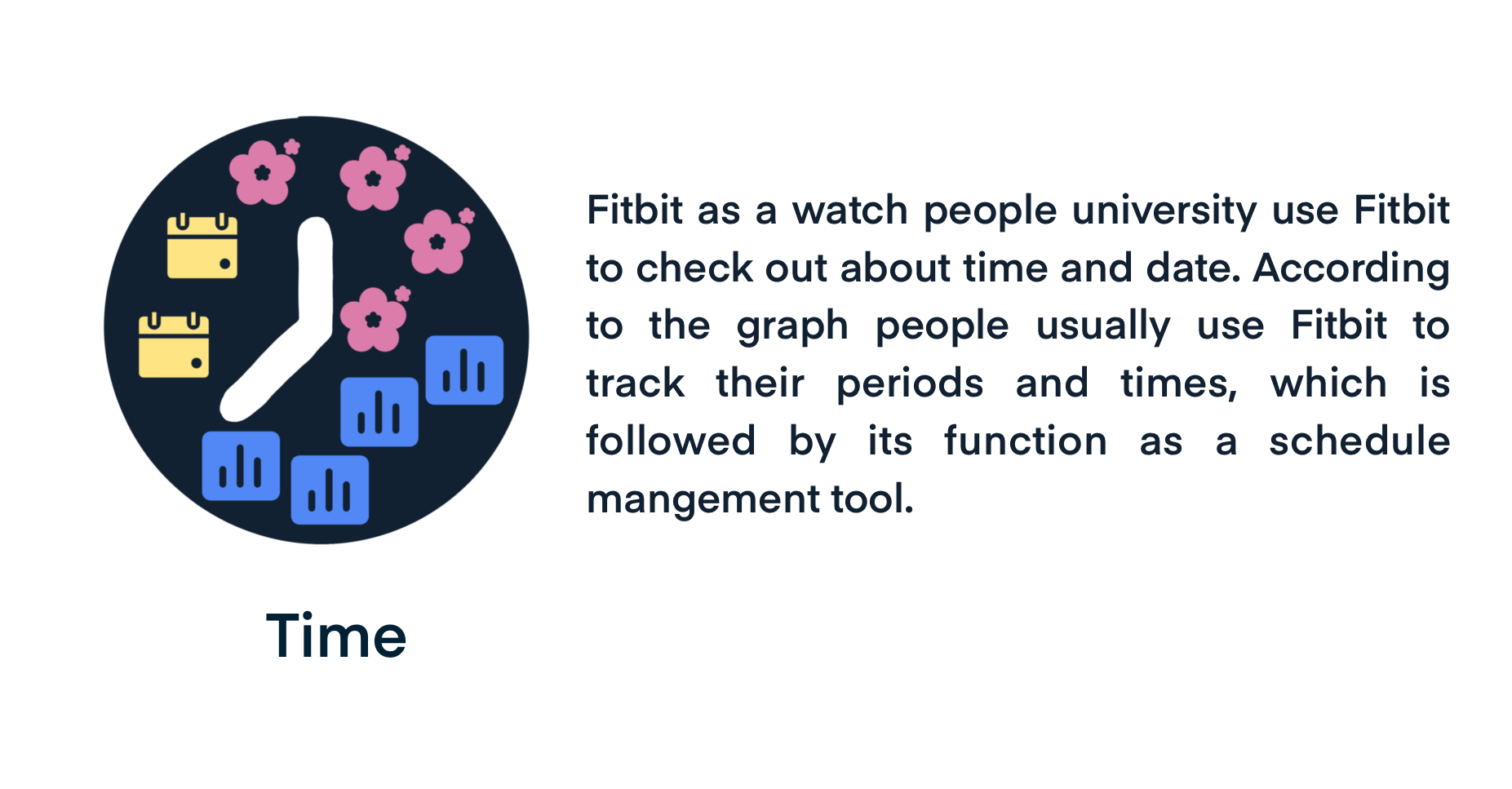
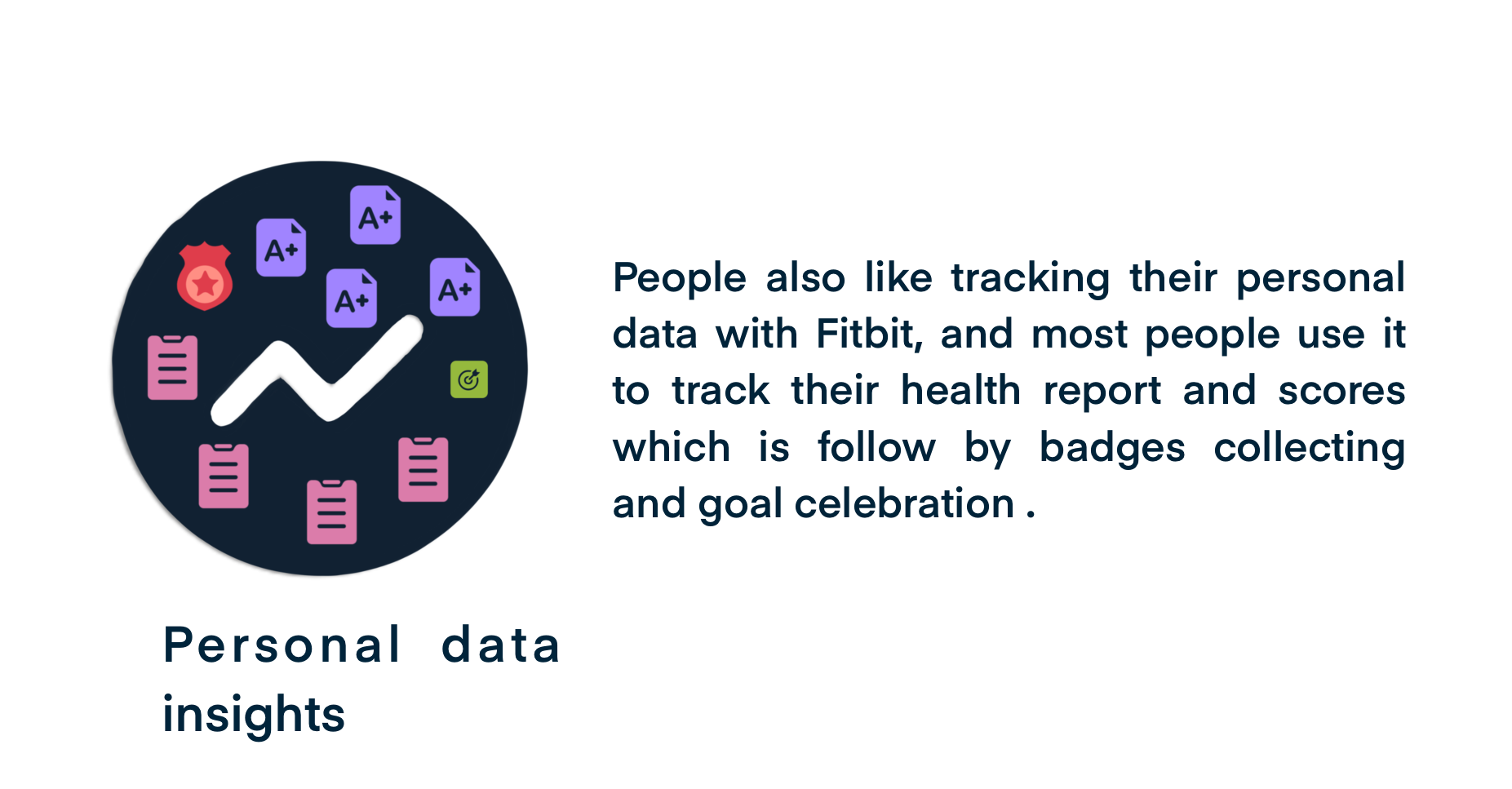
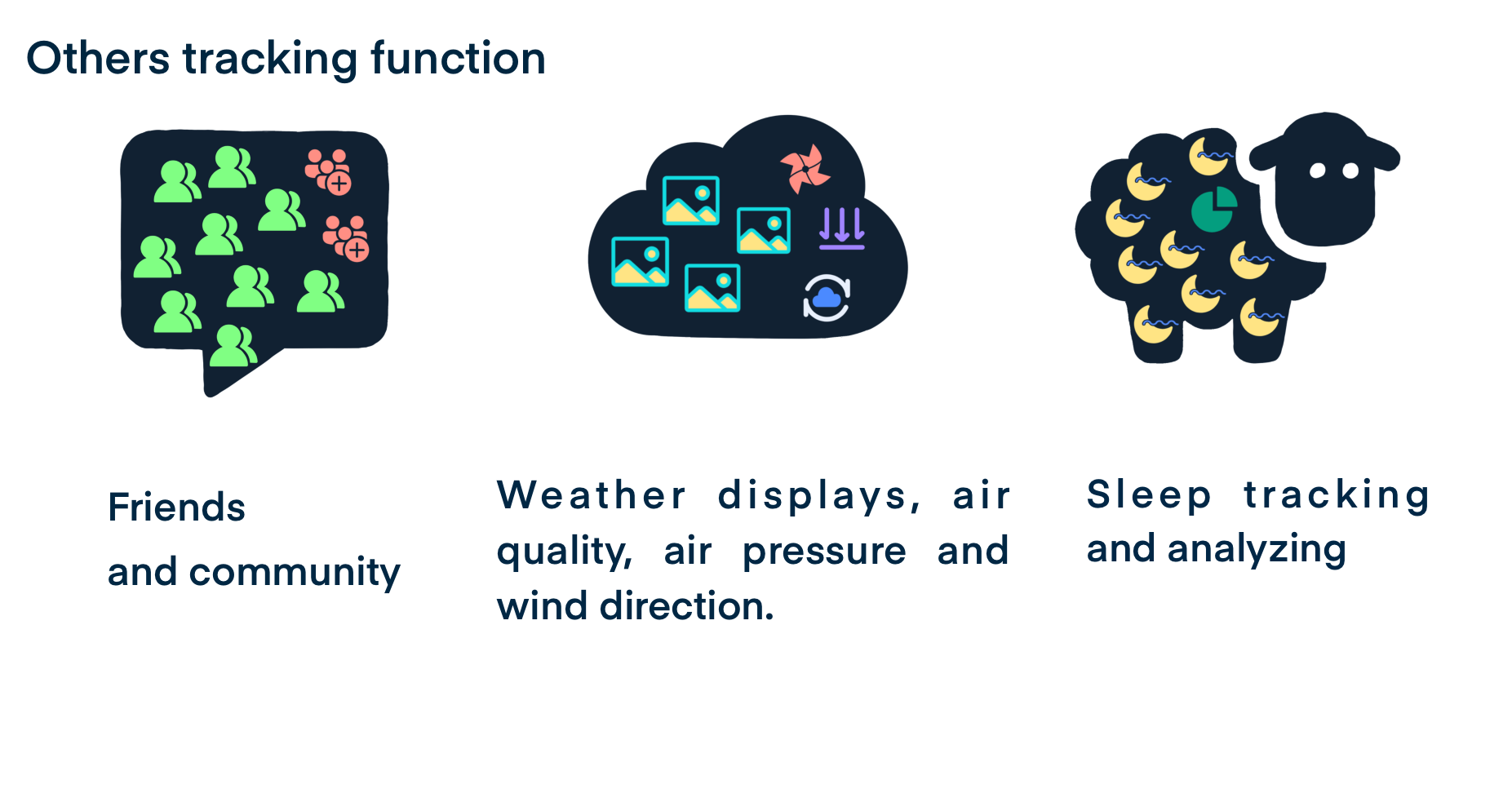
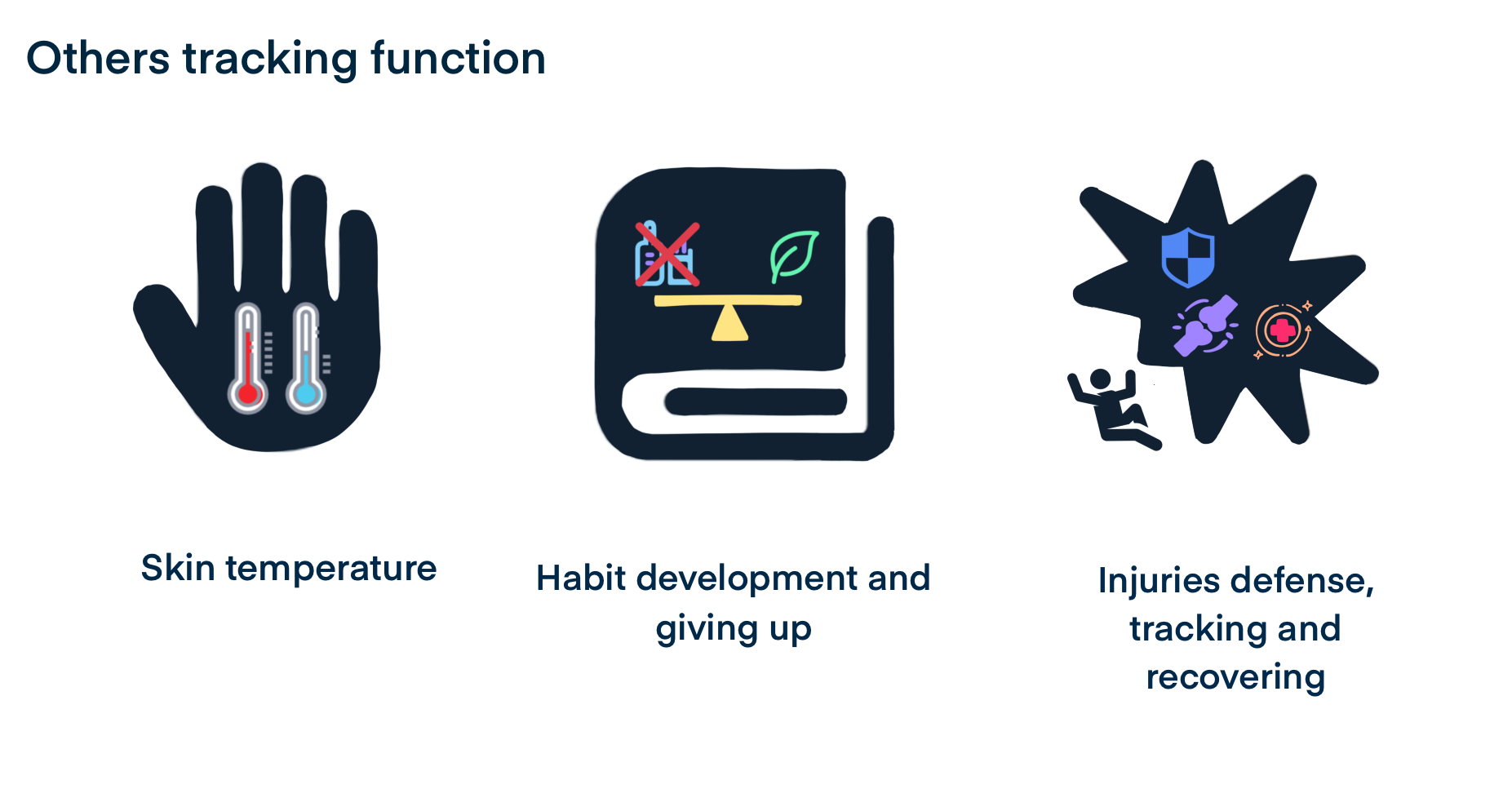
A crawler software "octoparse 8" was used to capture the whole sample in Fitbit community. The data collection time was limited to January 2021 to March 2022. A total of 744 pieces of data were captured, and 536 pieces of valid data related to the subject were left after manual screening. The valid data are divided into 15 categories: blood (information related to blood testing), voice (information related to sound transmission and control), stress and mental health (information related to monitoring emotion and relieving stress), etc. For example, in the figure named "blood", there are 32 data related to blood, which are subdivided into five categories: blood glucose, blood oxygen, blood pressure, drug stimulation and hemoglobin, and their respective proportions are presented according to the attention of community users.We use different forms of icons to make creative data presentation diagrams.
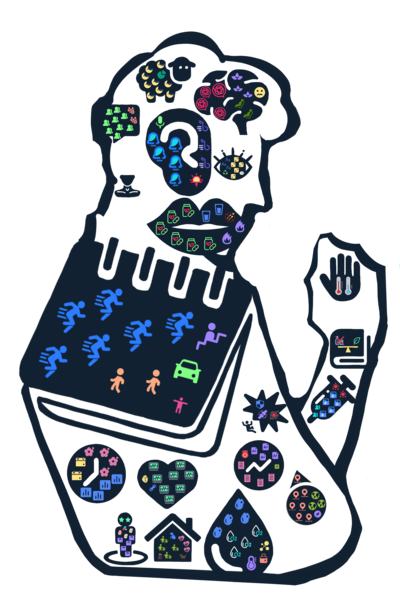
Research shows that in a post-epidemic world, it has become common for people to use wearable devices to track 'latent' data about their bodies. The body is no longer the traditional physical body, but a vehicle for these vast databases; and the medium is an extension of the body. The vast capabilities of wearable devices can not only affect one's vision, making one's perception linear, but also, through powerful interactivity, making one's perception three-dimensional. Pandemic has undoubtedly contributed to the awakening of body consciousness, and in this awakening of body consciousness, wearable devices, exemplified by Fitbit, have had a profound impact, and future humans can be armed with this personal data to defend themselves against possible biological disasters.